The big launch moment. The big headline. The big influencer partnership. These are the dreams that go-to-market strategies are made of. They’re also some of the most persistent misconceptions about launching a new brand or product. Let’s debunk them.
We’ve helped a lot of brands find agencies for go-to-market strategy – from skincare companies launching new products to healthcare businesses with novel tech, SaaS products entering new markets, well-known brands launching new sub-brands and so forth. And in every instance the heart of their challenge has been the same: how do I best introduce this idea/product/philosophy/ambition to the world?
It’s a huge challenge, and it’s only getting bigger as the media and comms landscape fragments. It’s no longer enough to launch with a big splash, land the relevant headline, and sit back and enjoy your hard work. Today’s brands need a plan that can take them up to the first day and far beyond, strategising for all the comms channels, outlets and partnerships that are needed along the way.
Yes, it’s a launch strategy, but it’s also an understanding of what the launch moment looks like, when it should happen, how brand and digital factors into that, when press is involved, when influencers are wooed (or not), what role events and activations play, how the founder shows up. It’s a many-stringed instrument. It might even be a whole orchestra.
Despite all that, the myth of the one big launch moment remains seductive. As do the big headlines. They’re part of a cohort of stubborn misconceptions around go-to-market mms strategy. So we called up Daly – an agency that’s helped amplify brands and products including Substack, Yahoo, Penguin Random House, Pentagram, Standards Manual, Quinn, and League One Volleyball – to debunk them, one by one.
Myth #1: You should think about go-to-market as early as humanly possible.
It’s true that good strategy and creative work needs time. But for many people, the temptation is to start thinking about the launch too far in advance. The risk of starting too early is that the launch gets pushed, and any partnership or press conversations therefore also get pushed. Ideally, when you bring onboard your go-to-market agency partner, you can be certain launch day will move, at most, by a couple of days or weeks.
“Some agency partners might say: we need a year to ramp up to your launch moment,” says Ally Bruschi, Partner and Managing Director at Daly. “We always say: we need two to three months. We want to keep things super truncated, focused, and concentrated in the lead up to a launch—and the closer we start to the projected launch date, the more likely that launch date is to be final. Lots of buildup and onboarding doesn’t make sense with a newly launching project, unless we’re coming on to support earlier stage workflows, like positioning and messaging."
Myth #2: The big brand launch has to be… big.
It’s understandable that founders and brand leaders want to trumpet their new business or product to the world as loudly as possible. However in many cases, businesses might actually benefit from a smaller, quieter approach.
“Sometimes we’ll talk to a prospective client and they’ll tell us their budget and goals, and we’ll recommend just focusing on launching something quietly with a friends and family gathering,” says Alex Daly, founder of Daly. “We suggest first getting users onto the platform, to get reviews and troubleshoot from there before you bring on social media, PR, and the other agencies you need to ramp it up.”
Myth #3: Once that beautiful launch moment is over, we can sit back
Founders and marketers might have spent months, if not years, nurturing an idea from its initial spark into a fully fledged brand or product. So it’s understandable that the ‘one big launch moment’ myth is so appealing.
However, successful go-to-market strategy is less of a single firework, and more of an ongoing display. Daly recommends brands find a go-to-market partner that can stay on after launch, for something like three to six months, to extend the start of their journey into more of a “long-tail attention moment”.
As Ally says: “These days, the launch moment isn’t necessarily the moment that press will cover. Rather, the launch is now just the first point of communication and validation with media. Think of your launch as a six-month snapshot moment in time, rather than the lead-up to a big moment that’s a crescendo and then it’s over. If you’re launching on September 15th, that’s not the last opportunity you have to tell this story. You can revisit it.”
Myth #4: Influencers need to get their hands on this as soon as possible
The relationships between brands and journalists, and brands and creators, are complex – and we’ve shared AUFI Insights pieces around how PR agency partnerships are changing, and how influencers are evolving.
Creators wield an increasing amount of power, particularly when it comes to reviews, so it’s understandable that brands launching new products or going into new markets are keen to lean on that influence. However, Daly says experience has taught them to slow these collaborations down.
“We actually recommend that brand new companies hold off on influencer and creator partnerships for a little bit,” says Ally. “If a brand has existing strong creator relationships they want to activate, we’ll help them figure out the best way to do it, but often influencers and creators need to see that a product is legit and has some traction before they’re going to review it or even accept it. That’s especially true in beauty products.”
Myth #5: We need a press release. And big headlines. In big magazines.
Dipping into the rolodex of journalists and landing a big launch feature might feel alluring, but that doesn’t make it right.
“If I could give one piece of advice for people to walk away with, it’s to throw away the old PR playbook and do things differently,” says Alex. “Stunts are dead. Press releases are dead. In the end, you have to understand what’s really going to get you the attention you want, because you can’t do things by the script any more.”
Rather than focusing on a single, splashy press moment, brands benefit from thinking more broadly. Legacy media certainly has a role to play, but there’s an increasingly significant ‘sidebar’ of media outlets popping up via platforms like Substack. If you’re a food brand, do you need to woo that legacy magazine, or do you want to be speaking to the likes of Snaxshot or Express Checkout?
“It goes back to ideas of what media means today,” adds Alex. “There might be someone putting your brand or product into their newsletter as a news item, and that can be part of your launch—becausehere’s a big blurring of the lines of what media is. You’ve got to get very methodical about who you’re trying to talk to, and then meet that audience where they are – instead of the old approach of sending the press release and lifting the embargo. It doesn’t work anymore.”
Myth #6: The founder can just do everything
We’re in an era of proudly, loudly founder-led businesses, and it’s become both accepted and expected that those founders have hands on every part of their brand’s journey. In this environment, it’s tempting to act as the main spokesperson for your business – updating the company LinkedIn, handling other socials, fostering relationships with reporters. For a small amount of founders this strategy might work, but for the vast majority it’s not going to be productive.
“There’s a list of 500 things a founder could be doing any given day or week, and following up with journalists is not the thing they should be prioritizing,” says Ally. “There are way more important things that only they can do! I think founders often underestimate how much time goes into getting even one pitch response—outsource this!
As a final point here, this doesn’t mean the founder is cut out of any go-to-market plan. Any good strategy will include ways of activating a founder’s networks and channels, where appropriate and manageable.
Myth #7: You can’t really put a number on things.
Creativity isn’t straightforwardly quantifiable. There’s that unpredictable element of magic or mysticism or surprise, or sheer serendipity that helps a piece of strategy soar. That said, brands and agencies working on go-to-market strategies together do need to be clear on deliverables.
Brands should expect their agency to present a clear and robust scope of what success looks like – and that should be as detailed as planning for a certain number of press placements, for example, or reaching a hit list of titles, or building out a series of influencer partnerships or hitting a set number of sales figures, or even having a general understanding of what good is going to look like.
“We help brands hone in on what success looks like,” says Ally. “What are you hoping to get out of this go-to-market launch? And from there we can understand what’s most important; what two or three things a brand should focus on first; and then regroup in six months to expand that to things like submitting to awards or brand partnerships or a huge event. There has to be prioritisation, because unless they have the biggest budget and team in the world, there’s just not enough time and money and attention to give to everything.”
Myth #8: Agency chemistry is a nice extra, not an essential
Over 15 years of introducing brands to agencies, we’ve seen the role chemistry plays in the closest, most productive partnerships. Beyond a match of skills, budget and scope, chemistry really can be the most integral piece of the puzzle.
“Clients are stressed out because they’re putting their baby out into the world,” adds Ally. “There’s a lot of inherent anxiety with go-to-market. So you want to make sure that on a chemistry level, you get along with the person or people that you’re hiring to bring your vision to life. This chemistry works two ways—and a clear rapport of trust and connection makes an agency want to work harder and drive results for you, too. Because a good agency partner will feel like your project is their baby, too!
“What really helps with go-to-market is trusting your agency and letting them do the work and do the magic,” says Alex.
ASK US FOR IDEAS has introduced hundreds of marketers and brand leaders to their ideal agency for marketing, brand and digital projects. Get in touch to find out more.
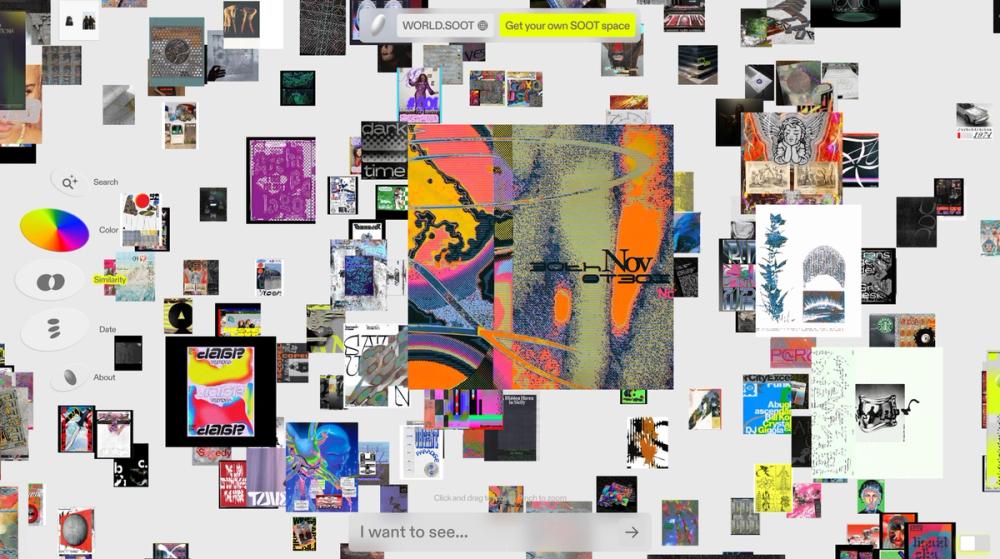
Image shown: Daly client SOOT.