In a sprawling premium space, what do people want from luxury brands?
If you ask Margaret Howell, she’ll tell you that luxury means cashmere sweaters and drying off from a swim on an empty shingle beach. Rick Owens will say it’s a nap. From our perspective, luxury is one thing above all else: mutable.
ASK US FOR IDEAS has found agencies for luxury brands from almost every sector – wellness, beauty, jewellery, travel, footwear, sport, wine, events…. Luxury has become many things to many people, and that’s a challenge for any brand building in the premium space.
Why is it so hard to pin down?
It’s not just that luxury now spans so many things; it’s that consumers’ relationship with it is impossibly more complex. “The only universal marker of luxury used to be price, but even that’s fairly flexible now,” says Em Dudley, Editorial Strategist at Matter Of Form, who’s worked with Accor, Belmond and Mandarin Oriental.
You can buy ‘luxury’ toilet roll, but also luxury biscuits. There’s quiet luxury. Sustainable luxury. Accessible luxury. Barefoot luxury. Slow luxury. The proliferation of terms is a symptom of luxury’s slippery state.
Often, it seems, luxury is whatever’s in opposition to what’s going on in our lives. Busy? It’s the chance to do nothing. Too many screens? It’s the excuse to be offline for an extended period (there’s a reason papers have been reporting on the ultra-wealthy turning away from so-called ‘smart’ homes and back to ‘dumb’ devices).
For example, for years the fintech space has been dominated by speed, connectivity and convenience. But when RobinHood decided to introduce a platinum card, it decided luxury should be a little bit awkward. “It’s annoyingly heavy,” CEO Vlad Tenev told WSJ about the card.
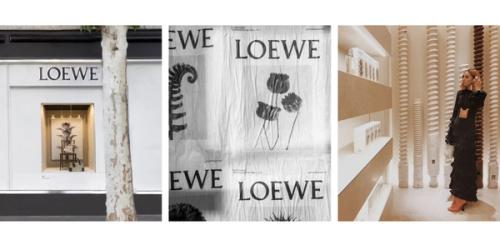
“It’s emotionally led,” says Grace Margetson, founder of Grace Margetson Studio, who’s partnered with brands including Chanel, Loewe and Louis Vuitton. “I think it’s a feeling, and it’s the product.
“People see brands how they want to see themselves and who they want to be … it’s who you want to align yourself with. I think it’s culturally negotiated and it shifts with taste and the times.”
Diluted brands
Despite this potent relationship, luxury brands are in choppy waters. “There’s overexposure and eroding desire,” says Grace. “There’s also scale dilution. Constant pressure for eyeballs. Watering down your point of view.”
Luxury brands need to be able to shape shift, wearing many faces and identities – created by designers, typographers, creative directors, ad agencies, photographers, illustrators – while retaining the soul of their brand. And that’s hard to do with an array of formats, platforms, channels, locations and competition.
Thriving in this context means brands embracing a steely singlemindedness about what they’re doing. They need be thoroughly clear on what makes them them and how that’s expressed in the world. As Grace says:“Brands need to know what they stand for. They need to be clear. And they need to feel confident in their own brand and developing their own visual strategy, rather than just copying other current brands. You need a unique and confident voice.”
A category of one
For a lot of heritage brands, that might mean rediscovering the maverick spirit of the original founders, innovators or designers and asking how that plays out in the here and now.
“A lot of the time, our strategy teams are talking about creating or carving out this category of one,” says Em. “We have huge verticals within industries. Everything’s fragmenting. There’s so many options, so many brands, so many competitors. That’s why we really play on that founding spirit. It’s what makes you different.
“Funnily enough, the challenge that a lot of brands face today is that they’ve forgotten why they began, and why they exist. Often, we’re trying to push our clients not necessarily into being bolder, but into being themselves.”
Go slow
Slowness is another key part of luxury’s survival strategy. When e-commerce and other online experiences first gained traction, their joy lay in speed and convenience – something that’s now just expected.
Instead of optimising endlessly for pace, some luxury brands are looking at the bigger picture and instead creating moments of pause – experiences, big and small, that feel stickier and more memorable. They’re adding in friction; not the kind that nags at you and makes your life more difficult, but a bit of careful creative sandpaper inserted neatly into a gap.
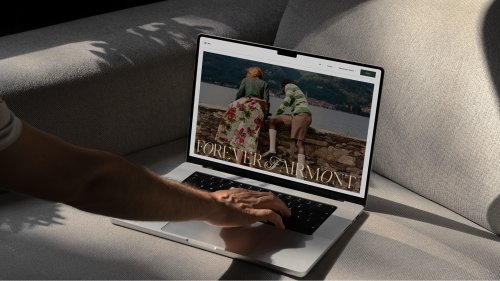
“We need to slow people down, because they won’t do it for themselves,” says Em. “That’s a luxury, being able to do that for people, and a lot of clients are asking us: where can we add in a moment that is slow and intentional, but branded?”
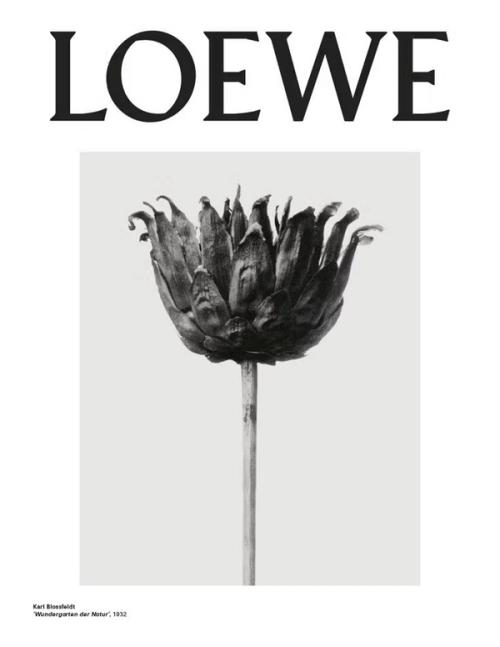
It’s something Grace is also seeing with many of the luxury fashion brands she works with producing beautiful, lavish, and deeply involved printed books and publications.
No-scroll media
They require far more time and effort than swiping though social media, but even so, says Grace, they sell like hotcakes. And in terms of brand-building, their influence can spool out over years, rather than hours.
“More and more, I can see the generation below us interested in slow things like vinyl and books, and the feeling it gives you – the beautiful large cover, the feeling of the paper texture between your hands, the smell of print, and seeing images and text big, rather than on a tiny blue screen you can easily scroll past,” she says.
“It’s magic in comparison. Print has real value in the luxury space. It’s something special that people will cherish and hold onto, and it’s rare we can say the same about online content.”
A final word on short-termism
The world’s most revered luxury brands count their history in decades, and occasionally centuries, rather than financial years. At the same time, marketers and creative agencies are under immense amounts of pressure to deliver, and deliver quickly. It’s easy for brands to succumb to fast-moving trends or demographic generalisations, but when it comes to luxury, in particular, a longer view is needed.
“A lot of marketing teams are going after younger audiences before they have meaningful spending power,” says Em. “In doing so, we risk overlooking entire groups simply because they’re no longer seen as the next wave.
“We need to evolve how we speak, how we show up, how we stay relevant across generations. Age matters, but it’s far from definitive.”
Maintaining a brand’s centre of gravity and their cultural status, particularly in the luxury space, means being able to peer over the ledge of the next generation, and the one after that, and the one after that, and understand what kind of solutions can work for a business in the next year, without chipping away value over the next decade.
“You don’t want to make things transactional,” says Em. “That’s not what luxury is. It shouldn’t be a quick decision. It shouldn’t be mindless purchasing.
“It’s craft, it’s human, it’s hands-on. It remains a bastion for that kind of care – there’s a real humanity in luxury, and when people feel that, perceived value soars.”
ASK US FOR IDEAS has introduced hundreds of brands to their ideal agency partner for branding, marketing and digital projects. Get in touch to find out more.
Image credits in order: Detail from Loewe work by Grace Margetson Studio; Digital platform for Fairmont Hotels & Resorts, by Matter of Form; Loewe work by Grace Margetson.